
According to the CDC, one in four Americans over 65 falls each year, and “unintentional falls are the leading cause of injury & deaths among adults 65 and over”. Falls are common, costly, and often preventable. Falling is not inevitable. Thoughtful small home improvements can dramatically reduce the risks.
There are countless articles and books about universal design and home accessibility—but who has time to read them all? Here are six practical things you can start doing now to future-proof your home and make it safer and easier to live in as your mobility, vision, and strength naturally change.
Here are my top six:
1. SLIPPING & TRIPPING
Flooring plays a major role in home safety. Thick carpets can catch toes and walkers, loose area rugs can slip, and highly polished floors can become dangerously slick.
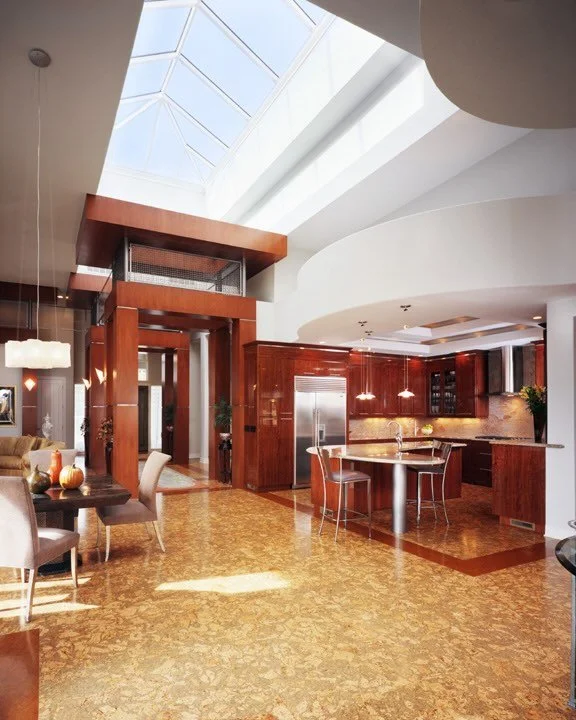
Cork Covered Flooring
I learned this firsthand while recovering from hip and knee replacements and using a walker. I found myself catching the walker on area rugs at least once or twice a day.
For anyone using a cane, crutches, walker, or wheelchair, aim for smooth, flat, even surfaces throughout the home—whether carpet, hardwood, LVT, or tile. With tile, avoid highly polished finish for floors. A slightly textured surface provides better grip, especially in kitchens and bathrooms.
When choosing bathroom or kitchen tile, I often run my fingers over it—and sometimes even add water—to see how slippery it becomes. Remember: soap and water can turn a marginally safe floor into a skating rink.
2. HOLD ON!
As we age, we naturally lose muscle mass and strength, particularly in our legs. (about 5% per decade after age 30). That is one reason getting up from a chair or navigating stairs can become more difficult.
People often compensate by grabbing furniture, countertops, walls, and railings for stability, using their arms to supplement their legs. Occupational therapists even look for handprints on walls as evidence of “wall walking.”
Good design can provide safer places to hold on. In addition to conventional railings, features such as substantial wainscot caps can provide a convenient handhold along a hallway.
But the most important handholds are assist bars—also called grab bars—especially in bathrooms, the most common location for falls in the home.
The best time to install grab bars is before you need them. Today, they can simply serve as towel bars or places to steady yourself when your hands are wet or your eyes are full of shampoo. If someone falls, they will instinctively reach for whatever is nearby, so I often install grab bars on solid wall blocking where towel bars would normally go.
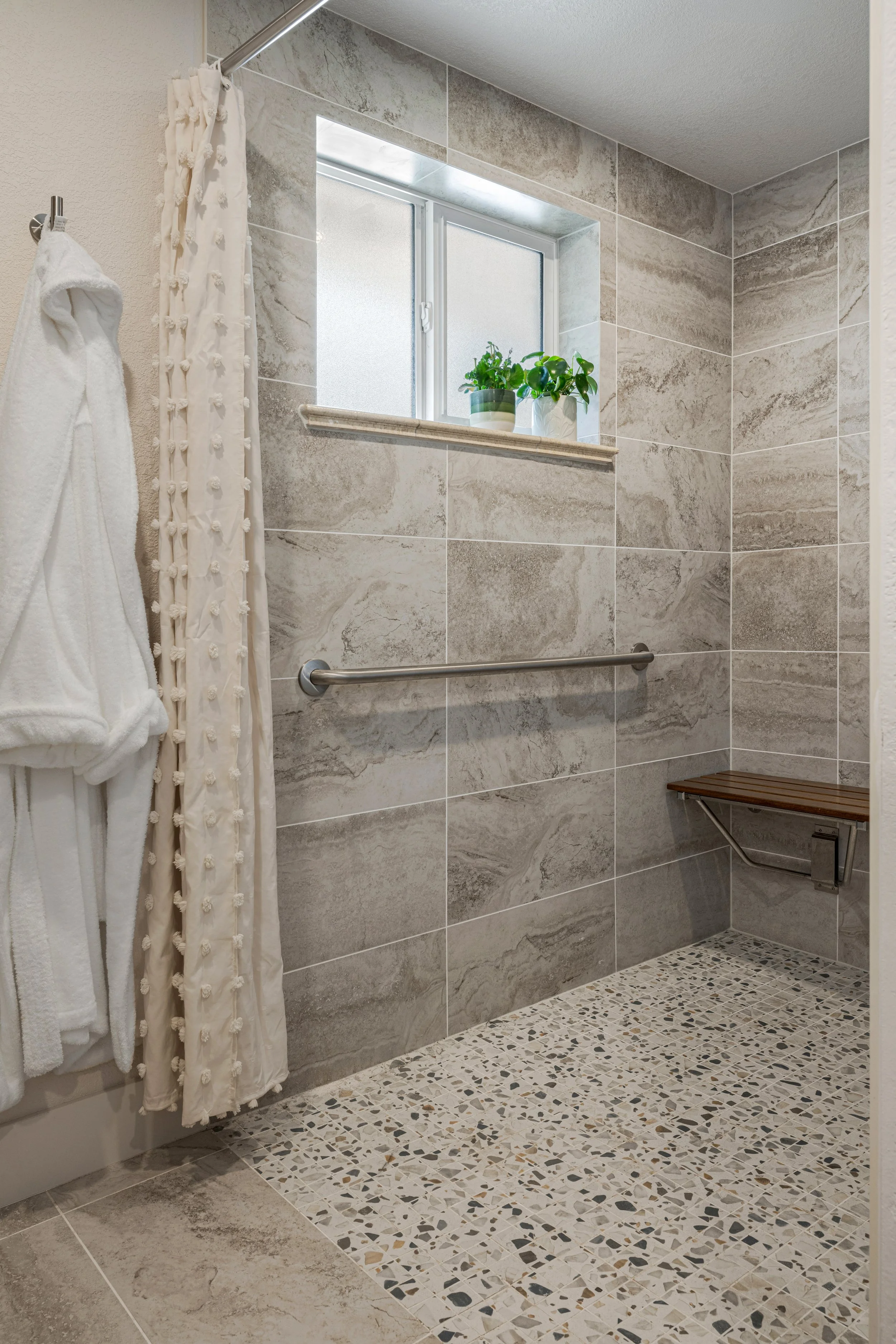
Looking into Curbless Shower with Grab Bar
Grab bars no longer have to look institutional, either. They come in a wide range of styles, finishes, and designs. Some even double as toilet-paper holders or soap dishes, such as the ones in the “Invisia” line by Healthcraft.
Most importantly, provide easy-to-grip handrails on every staircase—preferably on both sides. For the stairs down into your garage, consider the cantilevered angled assist bars now available
3. LOW STEP / NO STEP
Every accessible home should have at least one—and preferably two—ways in and out without a step.
A step-free entry isn't just for wheelchair users. It makes life easier when you're carrying groceries, rolling a suitcase, pushing a stroller, or simply walking through the door without worrying about tripping.
The same principle applies inside the home. The shower curb is often one of the most dangerous step hazards. A typical shower curb can be three or four inches high, while stepping into a tub can mean navigating a 14- to 16-inch obstacle.
For many homeowners, converting a tub to a curbless, roll-in shower is one of the best aging-in-place improvements available. A properly designed curbless shower eliminates the step and can provide a single, gentle slope toward a linear drain, making the floor easier to stand on and reducing the chance of water escaping onto the bathroom floor.
4. GOING UP?
Stairs deserve special attention—particularly going down. A slip near the top of a staircase can result in serious injuries by the time someone reaches the bottom. (See “Beautiful Hazard” Professional Remodeler November 2018 / proremodeler.com)
Most homes have stairs somewhere: to the front door, between the garage and house, or between floors. Properly designed stairs can remain usable well into old age, but many residential stairs are built right at the limits allowed by code.
I prefer stairs with a lower rise and deeper tread because they are more comfortable and safer, especially for older adults and children. Where possible, particularly outdoors, I try to get the rise closer to six inches, not the 7 ¾” allowed by code
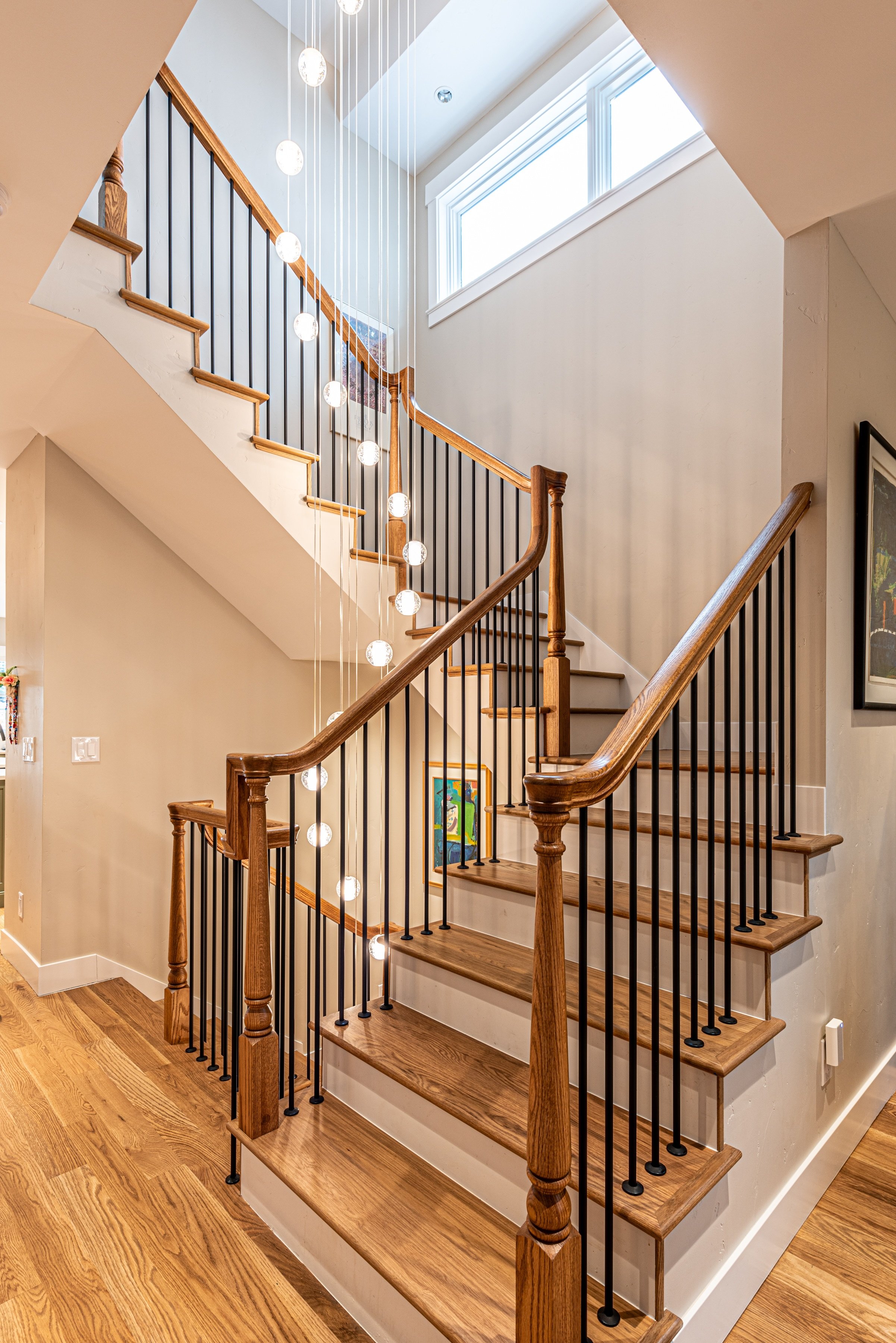
Properly Designed Stairs
If stairs eventually become difficult, there are several alternatives. Ramps are a simple solution, but they require much more space than most people realize. A standard ADA ramp has a 1:12 slope, meaning a 30-inch rise requires roughly 30 feet of ramp. So, for example, if you are building a ramp inside a typical garage, if your rise is more than 14 inches, you’ll need to build a landing and double the ramp back
Other options include platform lifts, stair lifts, and, when necessary, residential elevators. At the moment, I have two elevator projects in design right now for prior clients, one from 18 years ago, the other, 30 years. The right solution depends on the home's layout, the height difference, available space, the homeowner's needs and budget.
5. THE BETTER TO SEE YOU WITH
Good lighting is one of the simplest and most effective aging-in-place improvements.
As we age, our eyes need more light to see clearly, while glare becomes increasingly problematic. The goal is therefore more light with less glare. (See “Light That Sets Your Homes Apart” Professional Builder, August 2018)
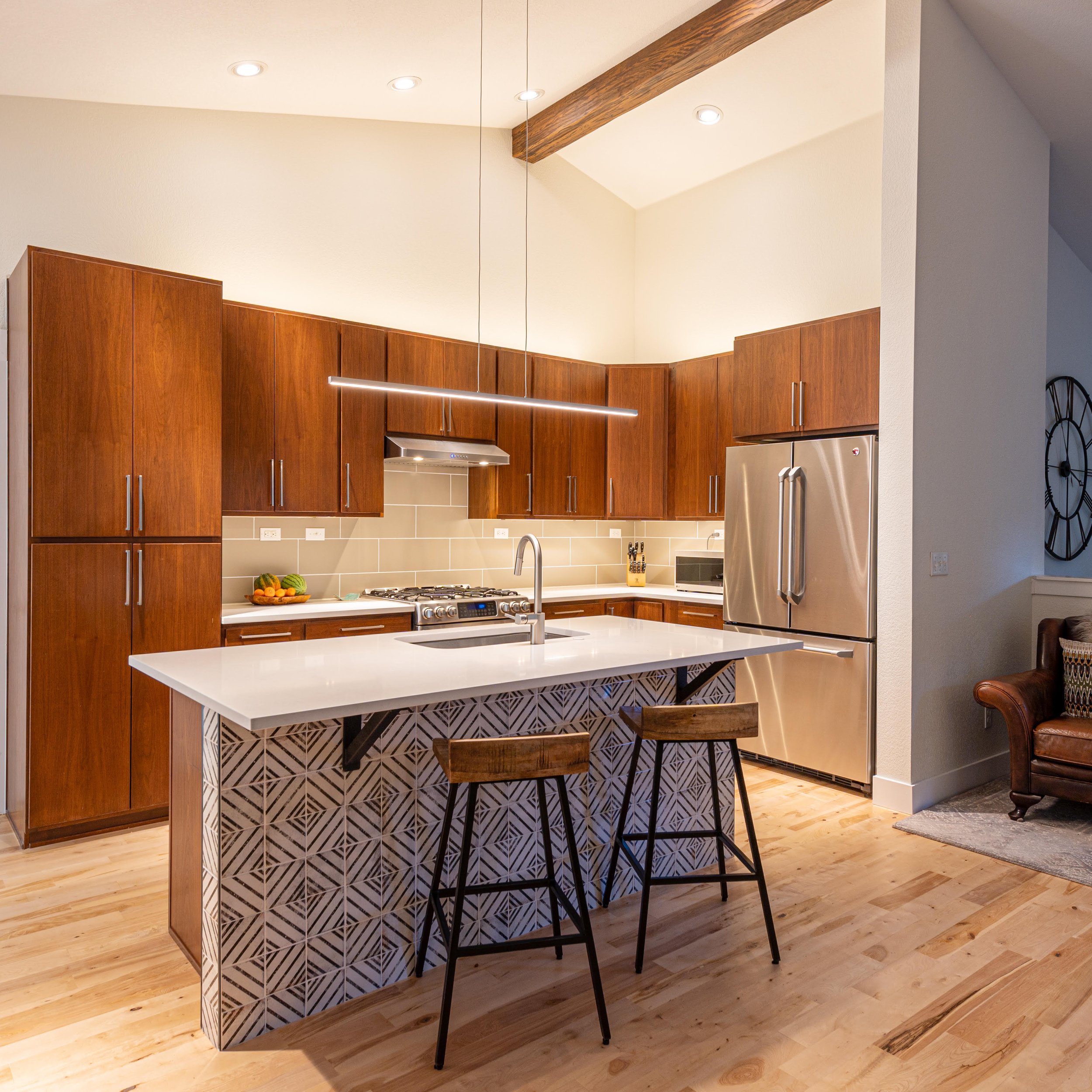
More Light with Less Glare
Ideally, you shouldn't see the light source—you should see what the light is illuminating. Use shades on light fixtures, deeply recessed downlights where appropriate, and window coverings that allow you to control daylight throughout the day.
It's also easy to add lighting without major construction. Consider sconces, lamps, undercabinet lights and motion-sensor nightlights, particularly in hallways, bathrooms, and stairways.
Rocker-style light switches are easier to operate than traditional toggles and illuminated switches can make them easier to find at night. Motion-sensor switches are especially useful in bathrooms, laundry rooms, and garages where your hands may be full.
6. MAKE IT EASY ON YOURSELF
Smart-home technology can make aging in place easier without requiring major construction.
Voice assistants such as Siri and Alexa can answer questions, provide weather updates, turn lights on and off, adjust the thermostat, operate blinds, and perform countless other tasks. For someone with limited mobility, these conveniences can make a meaningful difference.
Wearable technology is another valuable tool, especially for people living alone. Smartwatches and medical-alert devices can detect falls or other emergencies and summon help. And unlike traditional medical-alert buttons, many modern devices look just like everyday watches.
For families helping older parents from a distance, technology can also provide peace of mind. With permission, motion or pressure sensors can indicate whether someone has gotten up and moved around the house. Cameras in appropriate common areas can provide additional remote monitoring.
For someone who is prone to wandering, tracking devices can also help caregivers locate them quickly.
THE BOTTOM LINE
Ultimately, the safest home is one that combines good design with good habits.
Even the best accessibility features can't compensate for being distracted, walking while looking at your phone, drinking too much, or getting out of bed at night without taking a moment to get your bearings.
Get up slowly. Keep pathways well lit. Stay physically active to maintain strength and balance. And design your home so that the safest choice is also the easiest choice.
Aging in place isn't about preparing for decline. It's about creating a home that evolves with you. Whether you make a few simple changes or undertake a major renovation, every improvement is an investment in comfort, independence, safety—and ultimately, in you.